
Home > CaseLinear vibrating screen > Development directions for screening machinery
Amid the ongoing wave of industrial transformation and upgrading worldwide, screening machinery—serving as critical equipment in the production processes of numerous industries—has garnered significant attention regarding its technological evolution and market landscape. Leveraging its extensive professional expertise and forward-looking perspective accumulated over many years in the field of mechanical engineering, Honghe Technology has consistently closely monitored the development trends of screening machinery both domestically and internationally. Through thorough market research, an analysis of technological innovation achievements, and discussions with industry experts, Honghe Technology has conducted a comprehensive review of the current state of screening machinery development and provided a precise assessment of future trends.
(1) The modernization of industrial production toward larger scales has driven enterprises to expand in size and significantly enhance their production capacity. For instance, coal preparation plants in China that previously had a production capacity of 2–3 million t/a were considered large-scale; however, the emergence of coal preparation plants with a capacity of 12 million t/a now necessitates the deployment of large-scale auxiliary units to support these facilities.
(2) Application in heavy-duty and ultra-heavy screening operations. Large-scale mining projects require the processing of large-sized materials; the vibrating screens manufactured by France’s Sumesta Company are capable of handling large-sized materials with diameters exceeding 1 m.
(3) Development of vibratory screens based on ideal motion trajectories. With the objective of improving the screening efficiency of each section and the overall productivity of the screening machine, identifying a new type of screening machine grounded in ideal motion principles represents a new direction for the development of screening equipment. The relatively ideal screen surface motion is as follows: in the vertical direction, the amplitude at the feed end is greater than that at the discharge end; along the lengthwise direction from the feed end to the discharge end, the material’s velocity decreases progressively. Under these ideal conditions, an optimal screening environment can be created. Such an ideal machine demonstrates superior screening performance compared to conventional screening machinery.
(4) Development of a resonant vibrating screen: With the objectives of reducing the overall machine weight, lowering production costs, and enhancing service life and reliability, this study proposes a novel type of resonant vibrating screen. This screening machine employs mass m₁ as the working body, with the vibrator mounted on mass m₂. This new design significantly simplifies the structure; the effective vibration mass can be reduced by 30%–50%, and the excitation force can consequently be diminished, thereby ensuring sufficient strength and stiffness, reducing vibration noise, and achieving excellent vibration damping performance.
(5) The adoption of standardization, serialization, and universalization represents an effective approach to facilitating design and production while reducing costs. For instance, the side plates, screen plates, main beams, and drive shafts used in the USL and USK machines produced by Germany’s KHD company have all been standardized and universalized; furthermore, there are only three types of vibrators available. Similarly, the cold and hot sintered ore screens as well as the equal-thickness screens produced by Germany’s Schunk company offer only two standard configurations—demonstrating the high degree of standardization achieved in these areas.
(6) Application of self-synchronization technology: Utilizing dual-motor self-synchronization technology to replace gear-driven forced synchronization can simplify the mechanical structure, reduce noise levels, thereby streamlining routine tasks such as machine lubrication, maintenance, and overhaul, and reducing equipment failure rates.
(7) The vibration amplitude can be increased. The vibration process of the screening machine gradually intensifies to achieve higher linear velocity and acceleration, thereby enhancing production capacity and screening efficiency.
(8) Expansion into spatial applications. For fine materials, various types of vibrating screens have been developed successively, including swirl vibrating screens, cone vibrating screens, butterfly vibrating screens, and rotary probability screens, which not only reduce the required floor space but also enhance production capacity and screening efficiency.
(9) Application of screening equipment for difficult-to-screen materials. For fine wet materials with d <1 mm and moisture content ranging from 7% to 14%, such as those processed in dry screening, water-coal screening, or waste treatment applications, screening poses significant challenges. The vibrating screen manufactured by Germany’s Heinleman Company achieves a material movement velocity of 1.3 m/s and a screening efficiency ranging from 90% to 95%. This innovation has pioneered new solutions for screening difficult-to-screen materials.
During the process of industrial modernization, corporate scales have continued to expand and production capacities have significantly increased, driving screening equipment toward development in multiple directions.

Strict inspection before the product leaves the factory; Organize shipment according to the contract.
Assign dedicated after-sales service personnel to the site to provide guidance
Installation, debugging, and trial operation of guiding equipment;
Problems encountered by domestic customers during the production process, service
The staff guarantee to provide clear instructions within 24 hours
The solution is to rush to the site for processing as quickly as possible.
Adequate equipment spare parts and timely supply of spare parts enable Users can rest assured.
Provide customers with first-class equipment, technology, and services
Give clear solutions
Safe, high-quality, and reliable
Crafty manufacturing, striving for excellence
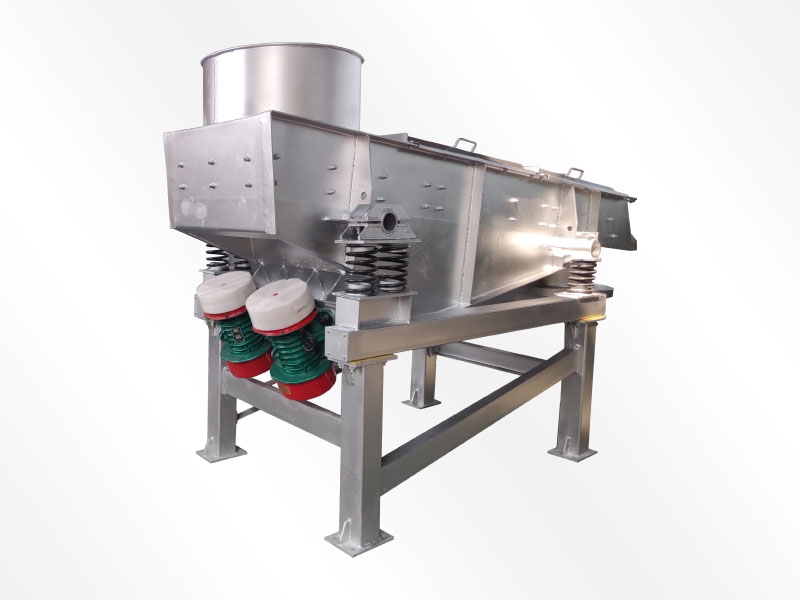 Vibrating Feeder
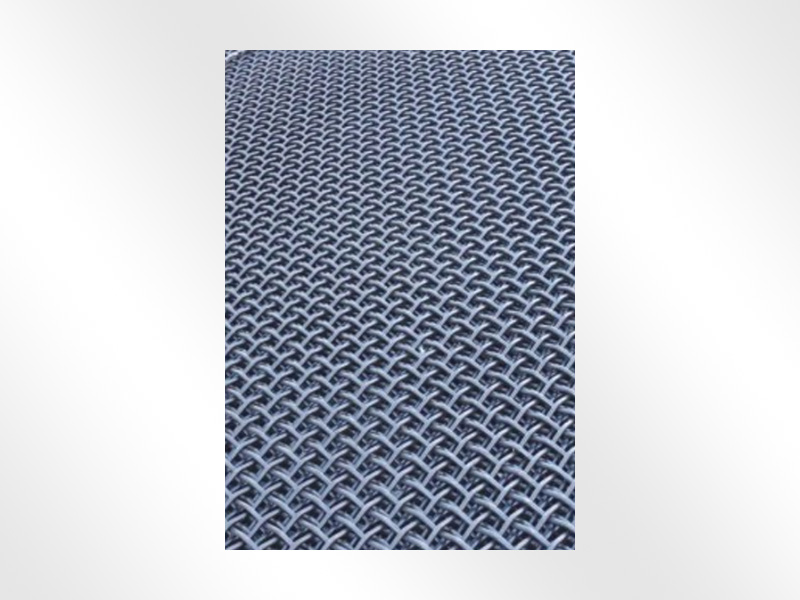 Manganese steel woven screen mesh
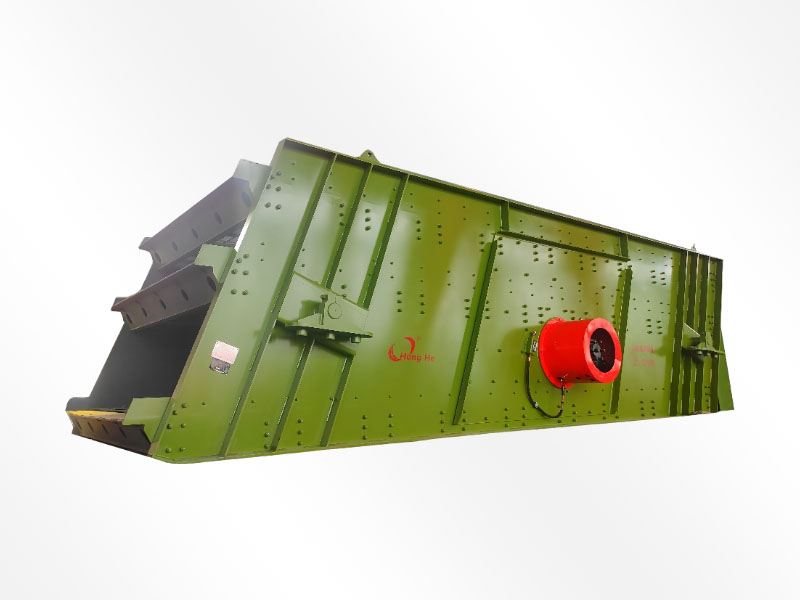 High amplitude thin oil circular vibrating screen

Email:
honghekj88@163.com
 0086-0373-5579588

 Spare Parts
 EN
EN
